
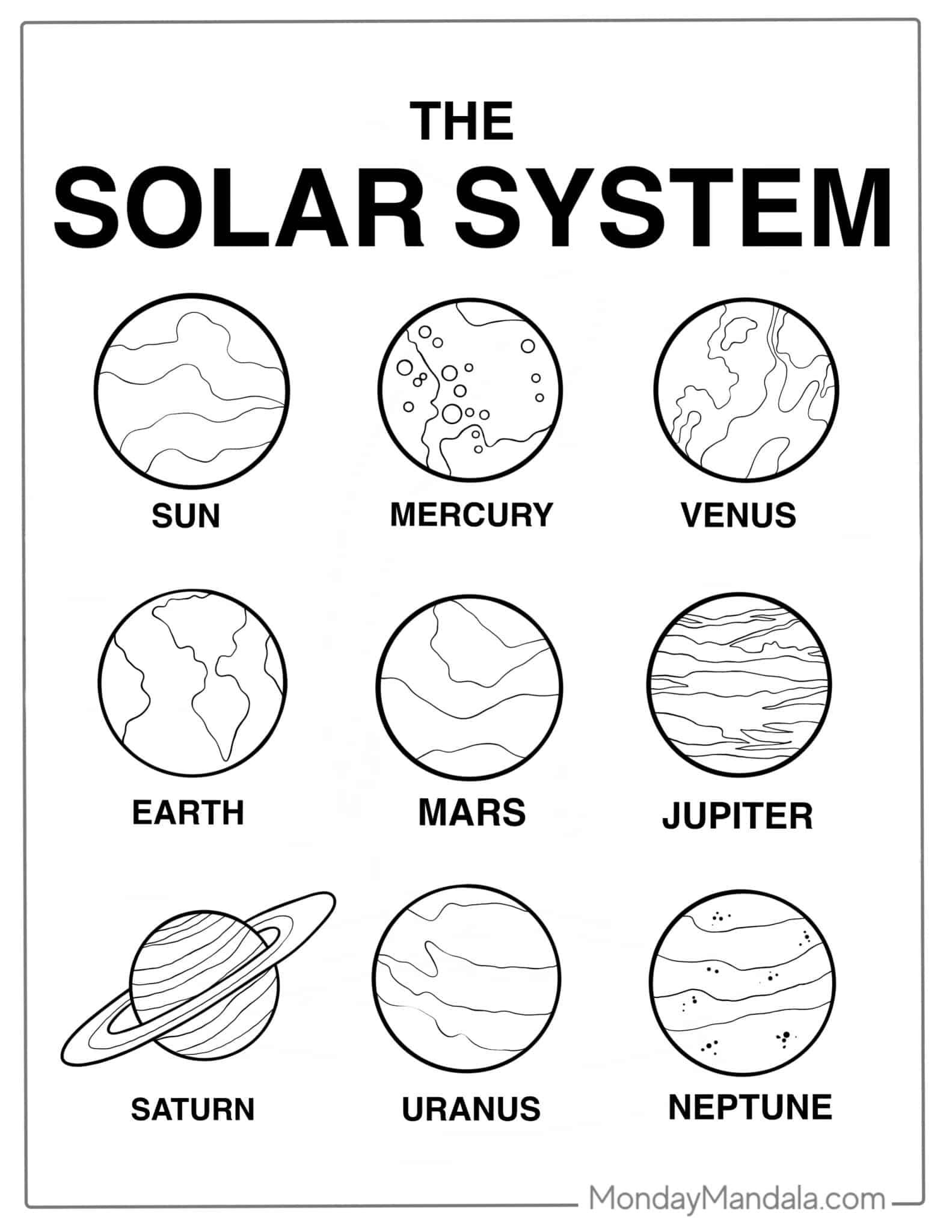
As a parent and space enthusiast, I’ve always struggled to find engaging ways to teach my kids about the solar system. Textbooks feel dry, and apps often distract more than educate. That’s when I stumbled upon Solar System Coloring Sheets—a simple yet brilliant tool that combines creativity with learning. These sheets aren’t just about filling in planets with crayons; they’re a gateway to understanding celestial bodies, orbits, and even basic astronomy concepts. My youngest, for instance, now knows the difference between a gas giant and a terrestrial planet, all because of a coloring activity we did last weekend.
Why Solar System Coloring Sheets Work
Coloring sheets are more than just a quiet activity for kids. They engage multiple cognitive functions—hand-eye coordination, color recognition, and spatial awareness. When paired with educational content, like the solar system, they become a powerful learning tool. I’ve noticed my kids retain information better when they’re actively involved in the process. For example, after coloring Saturn’s rings, my daughter asked why they’re so distinct. That led to a 10-minute conversation about ice particles and orbital mechanics—something a textbook page could never achieve.
Choosing the Right Coloring Sheets
Not all coloring sheets are created equal. Some are too simplistic, while others overwhelm with details. I’ve found that the best ones strike a balance between accuracy and accessibility. Look for sheets that include labels for planets, moons, and other features. For older kids, sheets with astronomical data (like planet diameters or distances from the Sun) add an extra layer of learning. My go-to resource is a set of sheets from a reputable educational website that includes both basic and advanced versions.
Key Features to Look For
- Accuracy: Ensure the planets and their features are depicted correctly.
- Labels: Clear labels help kids associate names with visuals.
- Scalability: Sheets should cater to different age groups, from preschoolers to preteens.
Incorporating Learning into Coloring Time
Here’s the thing: coloring sheets are just the starting point. To maximize their educational value, I’ve started pairing them with short lessons or quizzes. For instance, after coloring Mars, we’ll discuss its red surface and the possibility of water. I’ve even created a simple table to compare planet sizes, which we refer to during our sessions.
| Planet | Diameter (km) | Distance from Sun (AU) |
|---|---|---|
| Mercury | 4,879 | 0.39 |
| Venus | 12,104 | 0.72 |
| Earth | 12,742 | 1.00 |
🌟 Note: Always cross-check facts with reliable sources like NASA or educational platforms to ensure accuracy.
The Unexpected Benefits
Honestly, I didn’t expect coloring sheets to become a family bonding activity. But they have. My older son, who’s 12, now helps his younger sister identify constellations on advanced sheets. It’s become a way for us to connect over shared interests while subtly reinforcing STEM concepts. Plus, the finished sheets make great wall art—a constant reminder of what we’ve learned together.
This is where it gets interesting: I’ve started using these sheets in my volunteer work at a local community center. Kids who initially showed little interest in science are now asking questions about black holes and nebulae. It’s a testament to how accessible and effective these tools can be when used thoughtfully.
While Solar System Coloring Sheets aren’t a substitute for comprehensive science education, they’re an excellent supplement. They’ve made learning about space fun, interactive, and memorable for my family. If you’re looking to spark curiosity in young minds, give them a try—just be prepared for a barrage of questions about Jupiter’s Great Red Spot afterward.
Related Terms:
- free solar system coloring sheets
- solar system coloring sheets printable
- solar system word search
- solar system coloring
- moon coloring sheets
- space coloring sheets


